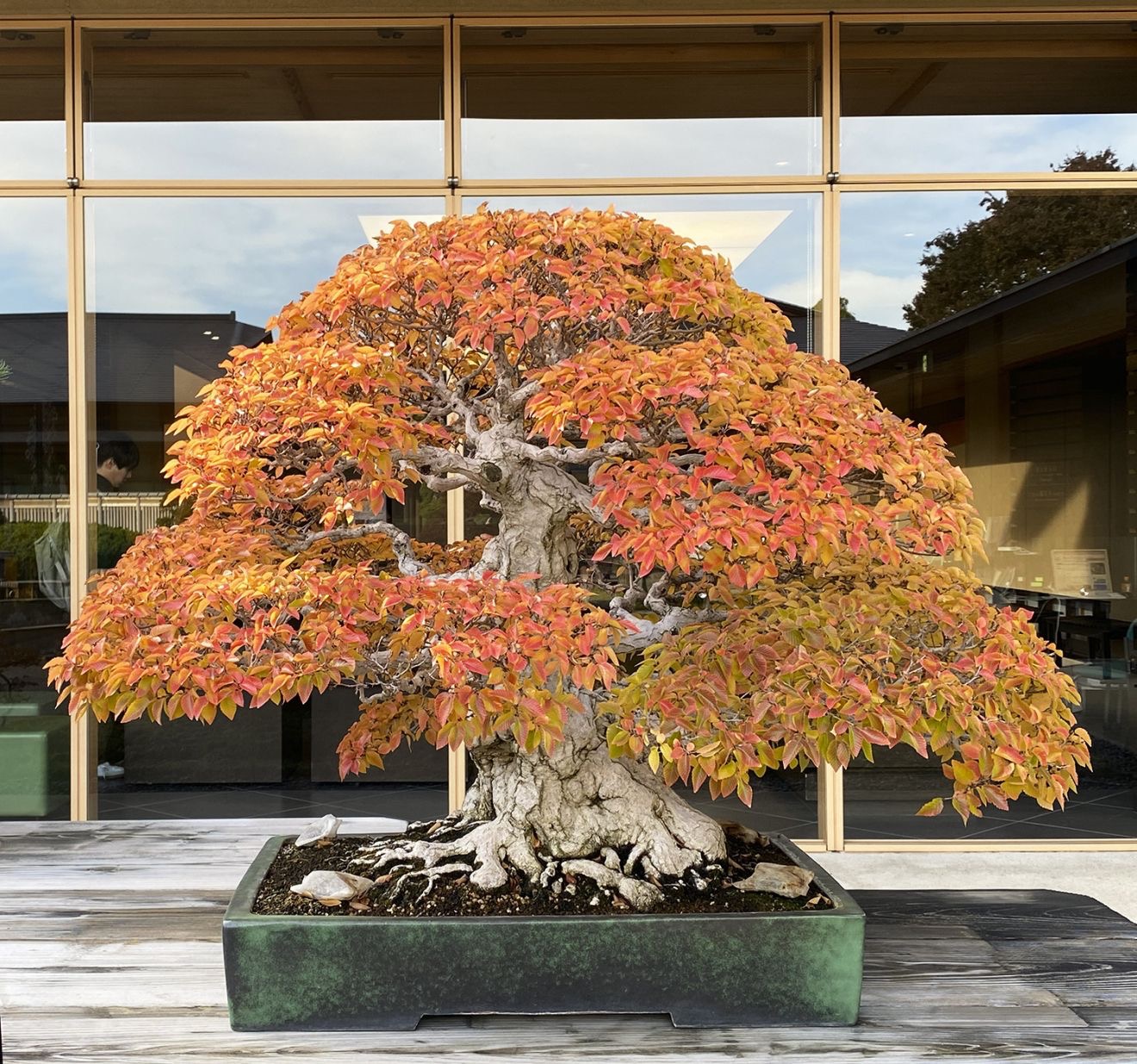
It is this cycle, this rhythm of stress and then recovery and the tree’s “memory” of these events, as embodied by its form, that leads to the creation of great, old bonsai…
Walter Scott
The changing of the seasons signals to bonsai practitioners that it is time to perform a certain set of actions on our trees. Late winter/early spring is the start of repotting season. Repotting is one of the most labor-intensive activities in all of bonsai, an art form filled with labor intensive activities.
Based on one’s specific location and resources (such as having access to a temperature-controlled environment, a greenhouse, for example), the repotting process has a) been ongoing for a number of weeks, b) only recently started, or c) may still be weeks away. It therefore seemed to be an appropriate time to consider repotting as an example of the work that the bonsai art form, the practice of bonsai, requires of us, and how we experience it.

The Experience of the Bonsai Practitioner
Consider how much time we spend actually admiring a well-groomed bonsai (an aesthetic object). This isn’t to say that we don’t enjoy our trees between shows or exhibits. It’s just to point out that most of the time we spend interacting with our trees is, well, work. However, the choices we make while working are made in order to advance the tree artistically, aesthetically. Therefore, doing bonsai is an aesthetic practice. In other words, when we work on trees we are having (and hopefully enjoying) an aesthetic experience. John Dewey, an American philosopher and educator, explored these ideas in his book Art as Experience, originally published in 1934. (1)

Bonsai as an Aesthetic Practice
According to Dewey, the concept of the aesthetic-artistic human experience is rooted in everyday experiences. At the most basic level, he describes a living organism interacting with its environment; the organism experiences hunger for example, and then finds food, successfully fulfilling its need. All organisms seek to find equilibrium with their environment.
Humans have experiences all of the time as we interact with our environment. Dewey considers the experiences that one undertakes with a specific goal in mind, and that then result in a resolution of some kind, to be aesthetic experiences. For Dewey, such resolution is associated with the same emotion that one feels when appreciating an artwork or a beautiful natural scene, it is an aesthetic feeling. Are there activities that are not suitable for aesthetic appreciation, that do not produce an aesthetic feeling? Dewey would say that activities that are performed in an incomplete, “slapdash” manner or those performed with an indifferent attitude, without consideration for the quality of the outcome, are not aesthetic. (1)

The experiences that bonsai practitioners undergo while caring for their trees can all produce aesthetic feelings. Activities such as partial defoliation, branch selection, purchasing soil, maintaining tools, fertilizing trees, monitoring for pests, choosing a pot, selecting a display table, even watering, are all capable of being aesthetic experiences. Repotting is one of those activities.
Repotting
Repotting is an important process. It is best performed at a certain time, generally not of our own choosing, and it can be time-consuming. Repotting is associated with anxiety for many of us because, along with the need to repot our trees within a specific time frame, the way in which repotting is performed determines the progress of the tree for the foreseeable future, assuming that it survives. Remember that repotting disrupts the harmony that the living organism (our tree in this case) has achieved within its environment (the pot or container). Of course, the reason we are repotting is because we believe that the tree will soon lose the equilibrium it has established within its container as a result of impending soil particle collapse or compaction, root growth, etc.

The act of repotting a bonsai consists of a more or less common set of activities (sifting soil, mixing, cleaning pots, perhaps choosing new pots, freeing the tree, trimming roots, separating roots, cleaning and raking the surface soil, trimming roots again, preparing the pot, adding soil, arranging the roots, adding more soil and chopsticking, securing the tree, adding some type of top dressing, watering thoroughly, providing aftercare). It is the way in which one performs these activities, the preparation beforehand, the care and attention to detail while working, that determines whether the experience of repotting is an aesthetic experience; i.e., one that preserves and promotes the tree’s health and vigor, one that advances the tree towards the aesthetic goals, the design, that we have chosen for it.
With respect to one’s aesthetic goals when working on a tree, Dewey writes [regarding the making of any object] that, “the doing or making is artistic when the result is of such a nature that [the object’s] qualities as perceived [by the viewer] have controlled the…production [of the object]. The aesthetic experience…is thus seen to be inherently connected to the experience of making.” While working on their trees, then, bonsai artists must adopt and maintain an appreciation for the experience of the viewer of the tree; in doing so, the practitioner undergoes yet another form of aesthetic experience. (1)

Rhythm
If the tree is healthy and our aftercare is good, then the tree recovers from repotting, grows new roots and foliage, and begins to occupy the container once again as it regains energy. A new state of equilibrium in the container is eventually reached. This process is repeated throughout the life of the tree, and not just in response to repotting. Leaf pruning, branch pruning, responses to extreme cold, extreme heat, drying winds, insect attacks, and any number of events can disturb the equilibrium that the tree strives to achieve.
It is this cycle, this rhythm of stress and then recovery and the tree’s “memory” of these events, as embodied by its form, that leads to the creation of great, old bonsai at the hands of nature or aided by our own hands. The Japanese concept of mochikomi refers to the quality possessed by a bonsai after years of cultivation in a container, undergoing many cycles of wiring, root pruning, repotting, branch training, and loving care by a skilled artist. [Literal translation Mochi= to carry and komi = into or inside. “…the bonsai appears to meld with the pot, it appears to belong where it is”- Bjorn Bjorholm, podcast].(2)
This cycle of bonsai practice also changes the artist. The process of living, during which we interact with our environment and the environment in turn acts on us, leads to an accumulation of experience. Dewey wrote, “…things and events experienced pass and are gone, But something of their meaning and value is retained as an integral part of the self.” (1)
Conclusion
I wrote previously about appreciating an established bonsai as an aesthetic object, an artwork. I have attempted to show here that “doing” bonsai provides the practitioner with multiple additional opportunities to experience an aesthetic feeling while performing the common activities required to both maintain a bonsai and to advance it artistically. We can then see that these activities of seasonal bonsai practice are not mundane or routine. When we approach them carefully, performing complete actions, and with the quality of the outcome in mind, we cannot only appreciate them more but even feel exhilarated as we perform these aesthetic activities.
References
- Dewey, John. Art as Experience (paperback) TarcherPerigee; 1st edition (July 5, 2005)
- Bjorholm, Bjorn. Mochikomi, Bonsai Network Podcast, YouTube, https://www.youtube.com/watch?v=6dEFz7Y7DZk
- Scott, Walter. Appreciating Bonsai as Aesthetic Objects, Artistreebonsai.blog, 2023.
Leave a Reply